The “field”, as Coles describes, is the act of “what happens morally and psychologically within us, and what subsequently happens to us” (Coles Introduction 14) or a place where an observer’s experience significantly shapes their work and transforms the observer. In “A Move“, Esmaili reflects this view as she expresses her individuality, breaking free of the political oppression within the private space of her family.
Her field is not depicted as a stable sanctuary; rather, a site of negotiation, as she is pleaded with to wear a hijab or some sort of hat by her family members before walking into the gathering, since it is customary for women to do so. This act of resistance transforms the gathering into a political stage where the generational differences collide(displayed in the first photo). This displays Coles’ dimensions of the field as Esmaili places herself in this situation; she doesn’t simply just observe, she also embodies the tensions that her camera wants to capture and what she wants to portray. In addition, the use of multiple voices, silences, facial looks, and time spent on scenes carries meaning. For example, towards the end of the film, we see the camera focus on Esmaili and another person cleaning windows for a few seconds. At that angle, it seems like they are a reflection of each other, one set in the traditional ways and one breaking free, but both are still the same nonetheless, bound by family ties. This scene (shown in the second photo) portrays the complexities of “home” as being both a space of connection but also ressistance.
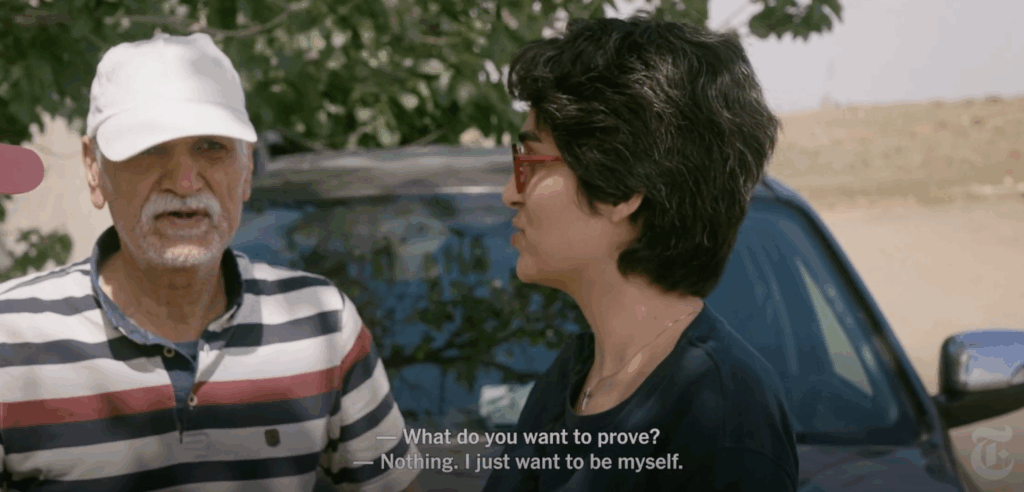
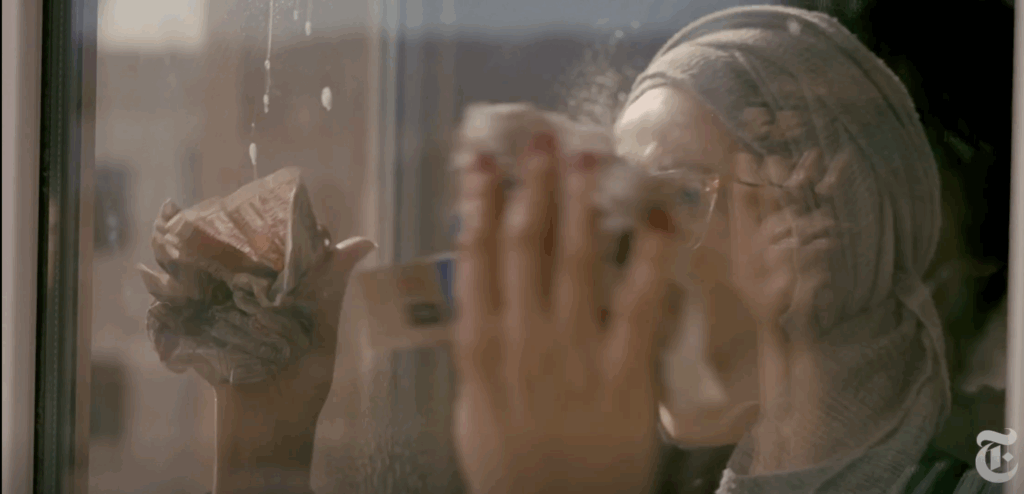
“A Move” embodies Coles’ goal by showing what happens when a filmmaker enters spaces that are both familiar (her family home) and morally doubtful (“streets not our own”). Esmaili enacts this process by turning her camera on her family, while also situating that domestic disruption within the larger political rupture caused by Mahsa Amini’s death.
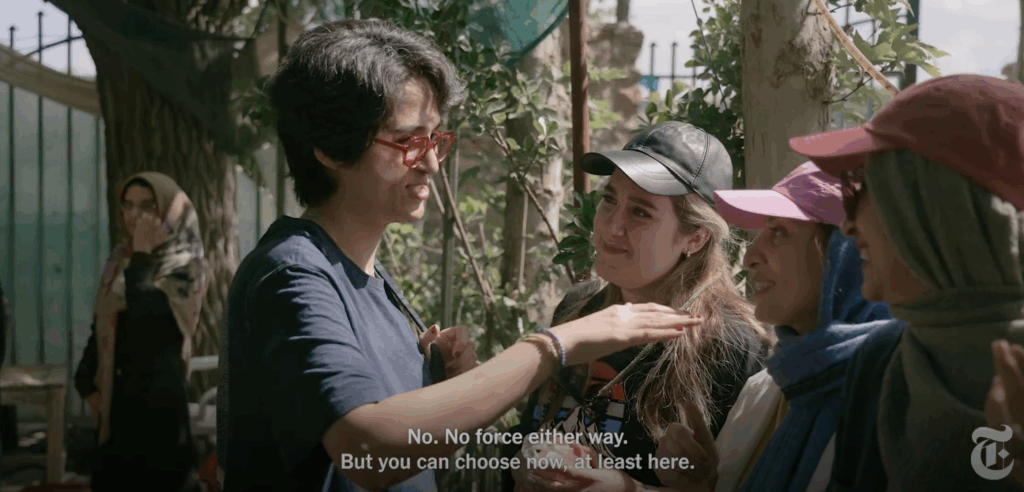
The film shows how venturing into the “streets” of home and family unsettles both the subject and filmmaker. Arriving without a hijab during family rituals, Esmaili crosses into uncharted waters, testing the limits of tradition and authority (picture 3). This act isn’t a neutral observation; it changes her, revealing her own vulnerabilities and moral commitments. Coles argues that the field reshapes us as much as we document it, and Esmaili exemplifies this by making her personal beliefs inseparable from the film.
Leave a Reply