In the introduction of “Doing Documentary Work”, Coles describes his conversations with James Agee, who reflected on what it meant to write about the tenant farmer families he had met in July of 1936. Agee was aware of his “location”, simply not in Alabama, rather, his social positions as an educated white man, writing about the cruel radiance of people’s struggles that he himself couldn’t experience, creating self-disgust within himself as well, since he is powerless to remedy the situation. Agee’s work helped to open Coles’ perspectives and became an example of how “location” is simply not a neutral location; rather, it’s a multifaceted experience that shapes how an observer notices and interprets the lives of others, and how it affects their physical/psychological state, community, and moral compass. “We notice what we notice in accordance with who we are” (Coles Introduction 7), recognizing that one’s position, biases, and responsibilities are essential pieces to understanding “location” as well as documentary work.
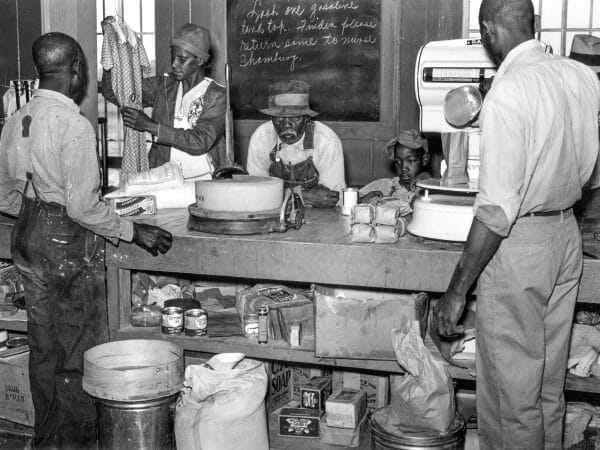
(Winemiller Gee’s Bend Cooperative Store)
The picture depicted above shows a group of people in the Gee’s Bend Cooperative Store, located in the Black Belt Region of Alabama. Although it’s stated in the introduction that the location was “a kind of earth, rich and productive for growing crops” (Coles Introduction 1), one of the defining cultural traits for the Black Belt is “an African American population at or above 50 percent” (Winemiller Black Belt Region in Alabama). The high percentage of African Americans in Black Belt counties furthered the distance of Agee’s being and theirs. In his passages, he revealed “how much we can take for granted, if we are certain people and if certain other people are our sponsors” (Coles Introduction 7). This portrays how, even though they are in the same location and are both people, there is still a social difference between him and the tenant farmer families that he observed and talked to, realizing that there is an obvious reality of the observed vs the observing, and they have their own notion of what the other intends on doing based on their appearance and background.
Cole’s idea of “location” reminds me of a time in middle school when I bought a sleeping bag for a homeless man as he was shivering due to the fall weather, with little money and a kid’s blanket. We were both physically in the same place, feeling the cool breeze in the air, but our social places were vastly different. Similar to Agee acknowledging the gap between him and the tenant farmers, I became aware of our contrasting positions: me having the ability to respond to the change in temperature, and his position, facing the cold without shelter or warmth. Thinking back to that moment, I realize that being in the same physical location does not mean having the same or similar living experience, as “location” is shaped not just by a geographical standpoint but also by privilege and circumstance. In both Coles’s analysis of Agee and my experience, “location” evolves into something more than where we are physically; it is the social, emotional, and ethical position we occupy in reference to others.
Leave a Reply